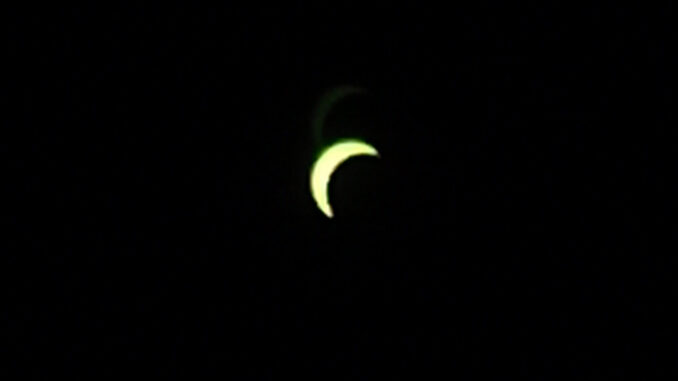
Well, technically it was a partial solar eclipse with approximately 93% coverage, but the next full solar eclipse is in 2090 and I have no intention of being around that long.
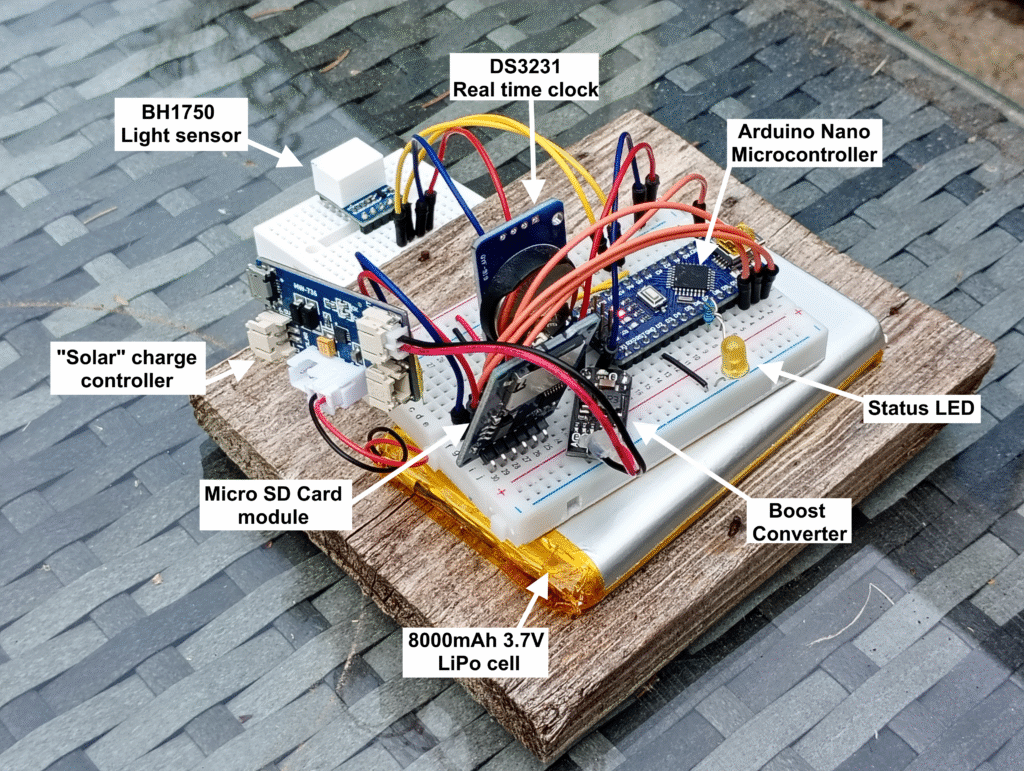
As a glutton for data, I set up a BH1750 ambient light sensor to track the lux levels. This sensor was rigged up to an Arduino Nano, an SD card to store the values and a DS3231 RTC for a time and date stamp.
To add portability, the whole setup was powered with a single cell LiPo pouch and a 5V boost converter. A CN3065 solar charge controller was used merely as a way to charge the LiPo via USB.
Measurements were taken at approximately 8 second intervals, and the microcontroller goes to low-power mode in between readings to conserve power.
Initially the sensor was equipped with a 3D printed diffuser with the intention to leave the test running in direct sunlight to detect the transition of the moon across the sun. However, results from the initial tests showed that this method produced a lot of noisy data, particularly from any cloud or other shadow that passed by.
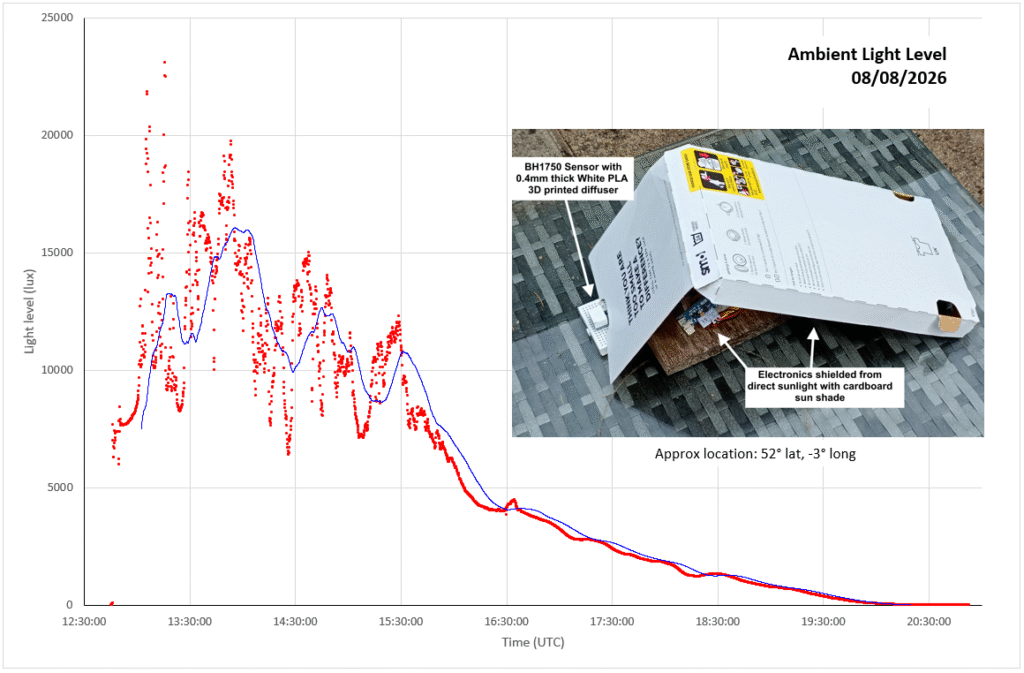
As you can see from the graph, the data from the start of the experiment to about 15:30 UTC is very noisy and somewhat random. Once the sensor was in shade from about 16:00 the measurements become more stable – this should have been obvious from word “ambient” in the sensor datasheet.
With the knowledge gained from these initial tests, the diffuser was removed from the sensor, and the setup moved to a shaded* part of the garden. The test was ran over three consecutive days. The 10th and 11th August gave baseline data, and the 12th August was the date of the eclipse itself.
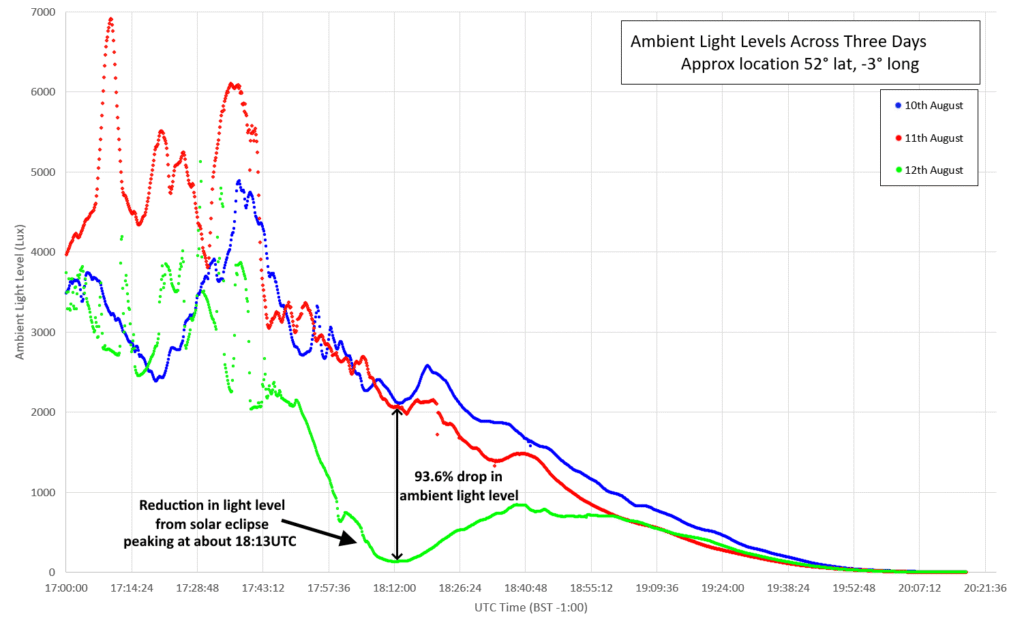
The red and blue points show the ‘baseline ‘control’ data from the first two days, the green points show the data from the day of the eclipse and it’s quite obvious to see the drop and subsequent increase in the ambient light levels as the moon transited across the sun.
In addition to this, the bottom point of data from the 12th August is at approximately 18:12 UTC (or 19:12 BST) which is remarkably close to the predicted time of 19:13 BST.
Further analysing the data at 19:13 BST, the light value during the eclipse was 133 lux and the average of the other two days was 2097 lux, therefore the the eclipse caused a 93.6% reduction in illuminance which tallies with the predicted amount of obscuration. (All expected data was pulled from this source, with Cardiff being the nearest locale noted on the list).
So overall, I would consider this experiment a success, and to complement the whole process, below are a few photos from the day.
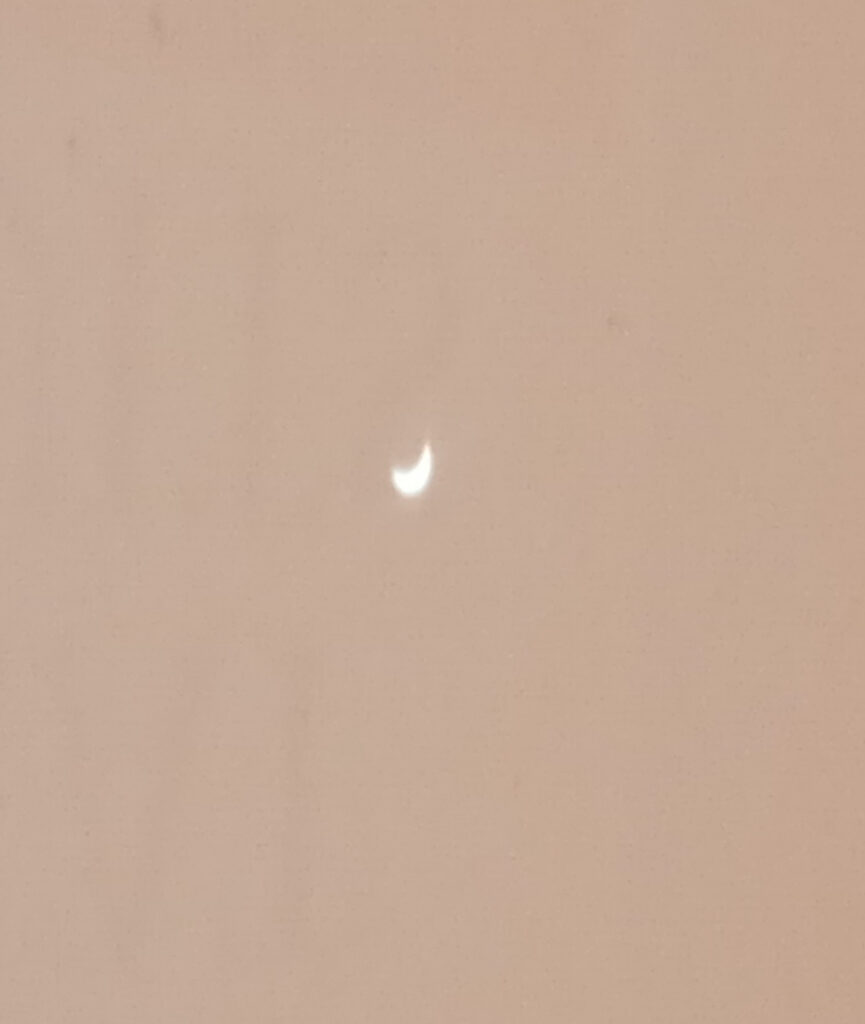
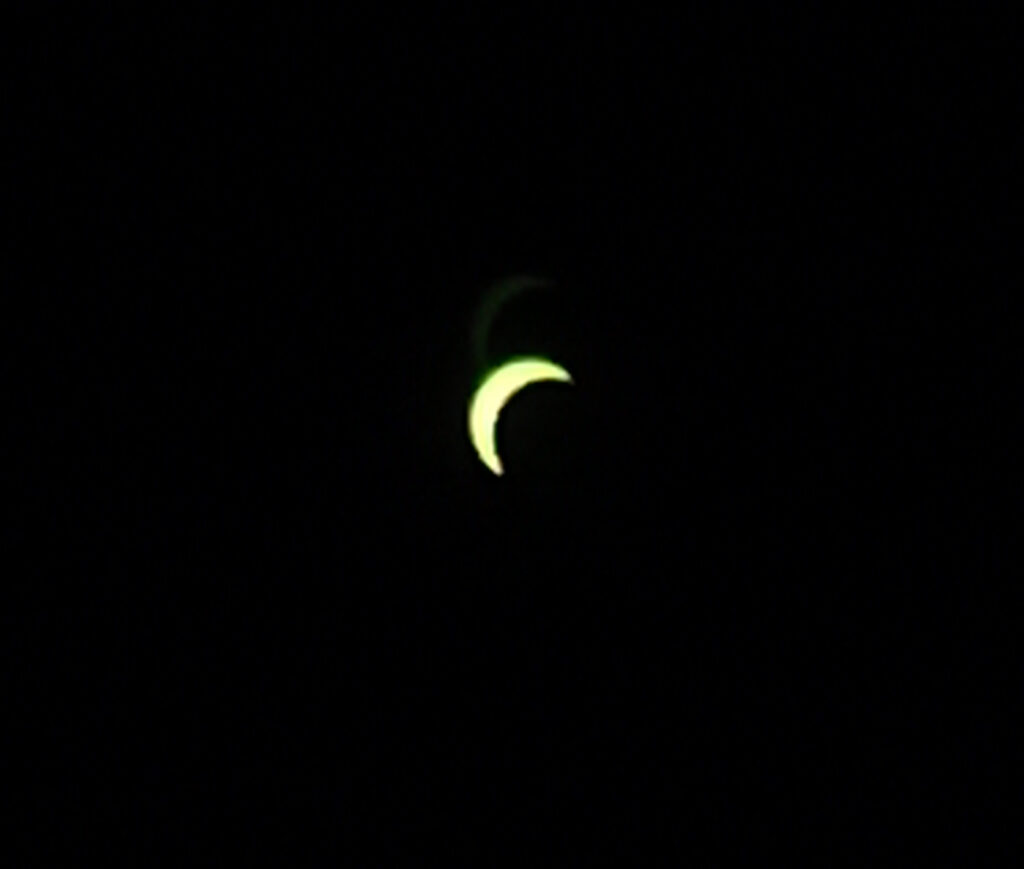
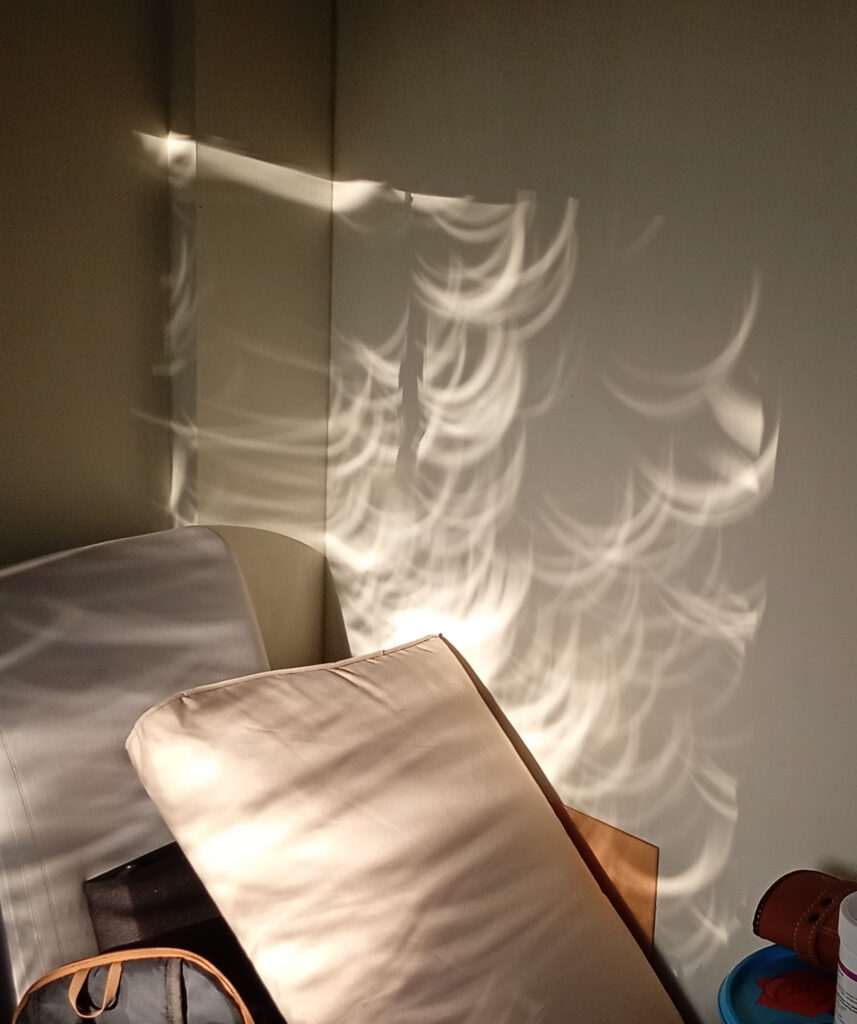
*Apparently there is a period of the day where the sun reflects off the kitchen window straight on to where the sensor was situated, giving a 30-45min period of noisy data. As shown on the video. And the graph. Thankfully this dissipated before the eclipse.